The cabin decision goes faster when it stops being about price and starts being about sleep. I book ship cabins for families and multi-generation groups, and the questions that predict a good week are the same every time: how you sleep, how much you stow, and where the cabin sits relative to everything that makes noise. Four steps cover it.
Step one: how you actually sleep
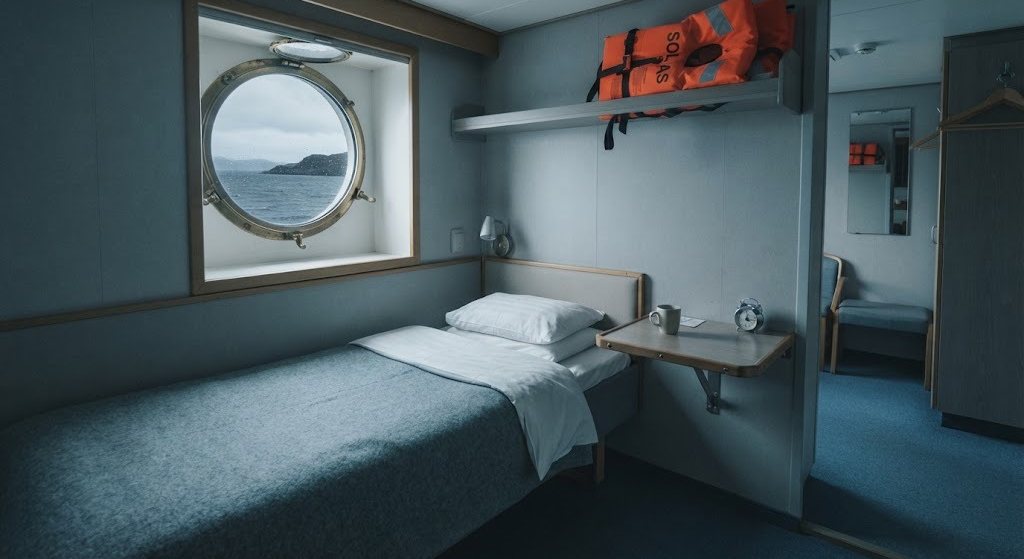
Write down three facts before you look at a single deck plan. Whether you wake at engine vibration, whether you need the room dark, and whether anyone in the party gets seasick in a swell. Those three answers remove half the cabins on the ship, and they do it faster than any category brochure can.
Light sleepers do best on mid-ship decks below the public rooms, away from the theatre, the galley and the stabiliser pockets. Anyone who needs darkness should check whether the cabin has real blackout options, since portholes and glass balconies differ a great deal. For seasickness, low and mid-ship wins on every ship I have sailed.
I write those answers down and hand them to the line as a request rather than hoping the booking form asks the right question. A cabin that satisfies two of the three beats a category upgrade that satisfies none, and on seven-night sailings the difference shows up as whether anyone is ready for breakfast on day four.
Step two: read the deck plan for noise
Deck plans are published for a reason, and the symbols matter more than the photography. I mark four zones before I shortlist anything.
- Above the theatre, cinema or main showroom: evening noise travels down.
- Below the galley, laundry or pool deck: early-morning clatter and chairs.
- At the front of the ship: the best view and the most movement in a head sea.
- Next to the elevators and the stairwell: convenient, then busy from six in the morning.
Cabins in the middle of a long corridor, away from doors and service lockers, are the ones I take for clients who light-sleep. The extra two minutes to the lift buys a quieter week, and on a seven-night sailing that trade is easy.
Step three: match category to the trip length
Inside cabins are the honest value play on short sailings, where the room is mostly for sleep. Oceanview cabins suit anyone who dislikes a windowless room but does not need the space. Balconies earn their price on itineraries with long sea days and scenic coastline, and they earn it less on port-heavy weeks when you are off the ship from eight to six.
Suites change the trip rather than just the room: priority boarding, a larger bathroom, sometimes a private lounge and a butler who handles the small logistics. For a seven-night family week I take two connecting cabins over one suite almost every time, because bedrooms beat a sitting room when three generations share a floor. The cruise trip planning piece covers that ship-and-date decision before the cabin question even starts.
Step four: the fare rules, checked in writing
The cabin number is half the decision, the fare condition is the other half. Refundable and semi-flexible fares cost more up front and cost far less when a date moves, which matters when the group depends on school holidays. Promotional fares often carry a deposit that is non-refundable and a balance date that arrives early, so I read three lines before confirming.
- What is due at deposit, and what is due at the balance date.
- Whether the fare can be re-quoted if the line drops the price.
- What happens to the cabin if the ship changes itinerary.
That last point decides more than people expect. Ships re-route with weather and with port availability, and a fare with a weak re-routing clause can leave you with a sea day you did not want and no lever to pull. I ask for the clause by name and keep the reply with the booking file.
The request I always add
Once the cabin is chosen, I send one request to the line: a note on the passenger manifest for the party's needs, a confirmation of the bed configuration, and, for families, the cots and connecting cabins in writing rather than in a phone call. Requests made at booking get acted on; requests made at check-in are subject to what is left. I also ask for the cabin number in the confirmation, because lines assign rooms late and a number that appears early can be checked against the deck plan while there is still choice left. After the cabin, the remaining decisions move to small-ship cruise routes or to the questions page when the answer is short.