Most trip problems I am asked to fix were created by booking something too late or too early. The calendar below is the one I give clients who want a group or family trip to run without a scramble: six checkpoints, what belongs in each, and the two items that slip most often.
Twelve months out: fix the shape
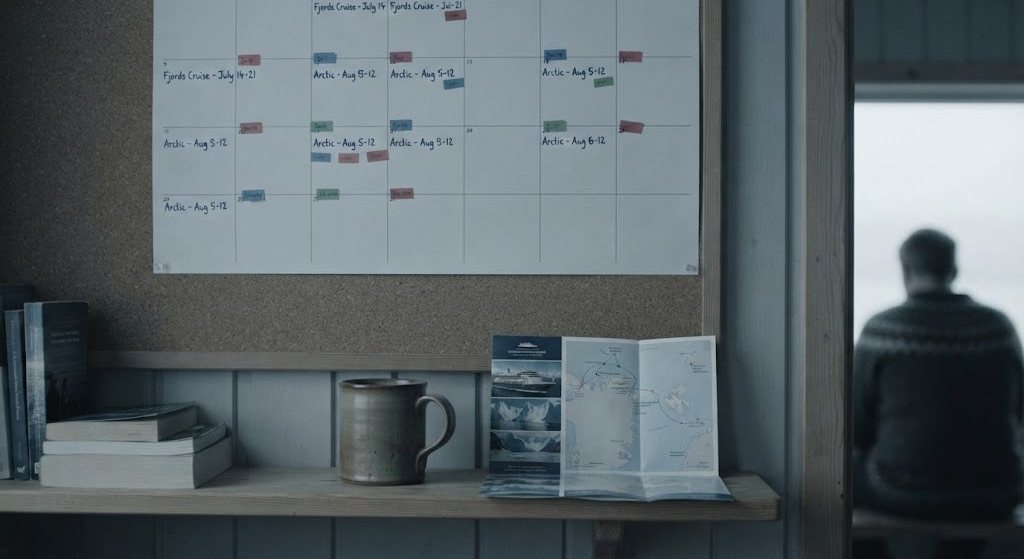
At this stage you are choosing dates, destination family and the version of the trip that matters most. Nothing needs to be paid yet, but the dates need to exist, because everything downstream hangs on them. For a group, this is when the budget range goes out and the yes-or-no deadline gets set two weeks later.
I also decide the anchor day here: the one excursion, crossing or dinner the trip exists for. Everything else is planned around it, and knowing it early means the transport that serves it can still be held. For a family, this is the point where school holidays and passport expiry dates get checked against each other.
Nine months: holds and deposits
Holds turn a shortlist into a plan. Flights for groups, villa or cabin inventory, and anything with hard capacity such as a small ship or a guided day go on deposit now. Payment schedules for the party get written at the same time, so nobody is asked for money twice in one week.
- Put the property or ship on a deposit and note the release date.
- Send the group its per-person range and the deposit deadline.
- Check passport validity for every traveller, six months past return.
Six months: the bookings that must exist
By here, the backbone of the trip should be confirmed rather than held. Internal transport gets booked: rail, ferries, the rental car, airport transfers. Restaurant reservations for the meals that matter are taken, and the paid activities with real capacity limits are ticketed. This is also the window for anything that needs an appointment, such as medical forms or equipment hire.
Insurance goes on as soon as the first non-refundable payment lands, not after the final balance. Cover bought at that point usually counts the deposits as well, and the cancellation window you might actually use opens from the day you commit. The detail sits in the travel insurance basics piece.
Three months: documents and money
Entry requirements, visa timelines and any vaccinations that need lead time get checked against the actual dates, not against what the trip needed last year. The group document is updated with the confirmed bookings, the addresses and the payment status. Balances for most suppliers fall due somewhere in this window, so I set a single date for all of them rather than tracking five.
One month and the last two weeks
Seat requests, room assignments, dietary notes and the transfer pickup times are confirmed in writing. Copies of documents go to one shared folder the whole party can reach, and the emergency numbers for the property, the airline and the insurer land in the same place. Two weeks out, I read the itinerary top to bottom for gaps and move anything that has quietly become unrealistic.
What I deliberately do not book early
Three things wait, because booking them early costs money or flexibility without buying anything. Single-entry tickets for attractions that sell out only on weekends go to the two-week mark, when the weather forecast is real. Restaurant tables outside the anchor dinner move to one month, since places that are easy to book at six months are rarely the ones you want. Travel cover is the reverse case: it is bought at the first deposit rather than early, and waiting is what costs.
Flights sit in the middle of that range. For a group I hold seats at the nine-month point and ticket when the property deposit is confirmed, because a fare that moves against you is survivable while a non-refundable flight for eight people on a trip that then cancels is not. The rule I keep is that nothing becomes non-refundable before the dates themselves are certain.
What slips, and the fix
Two items are late on almost every trip: the internal transport, booked when everyone is excited about the destination, and the final headcount, left until the balance date forces it. The fix is dull and works: put both in the six-month checkpoint and treat them as blocking. For the ship and date decisions that hang off this calendar, cruise trip planning and cruise cabin choice carry the detail, and short questions go to the contact page.
The calendar works best when it is pinned rather than remembered. I date each checkpoint on the day the previous one finishes, so a stage inherits a deadline instead of waiting for someone to notice that the month has changed.